Best Time to Visit the Serengeti for the Great Migration
Plan around the Great Migration with a season-by-season overview of herd movements, Serengeti regions, river crossings, and practical safari advice.
What the Great Migration really is
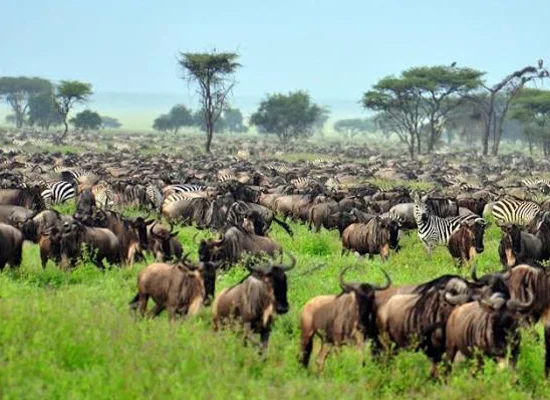
The Great Migration is the recurring movement of large herds through the Serengeti ecosystem in Tanzania and into Kenya's Maasai Mara. Wildebeest form the largest groups, while zebras and gazelles also travel through the region and predators follow the changing wildlife activity. It is a continuous cycle, not a single event or one procession that every animal follows together.
The herds search for water and fresh grazing. Rainfall and pasture conditions vary from year to year and across the ecosystem, so groups may split, pause, or move at different speeds. A seasonal calendar is useful for choosing where to begin, but it cannot promise the exact location of wildlife on a particular date.
A season-by-season Serengeti guide
Use these broad patterns as a starting point, then check recent local guidance when you plan. The seasons overlap, and not every herd moves at the same time.
- December to March: Many herds use the southern Serengeti plains and the grasslands around Ndutu. The main calving period is broadly January to March, although rainfall affects where and when activity is concentrated. Ndutu is in the adjoining Ngorongoro Conservation Area, so some itineraries travel between conservation areas.
- April to June: As grazing changes, herds often spread north and west through the central Serengeti and Western Corridor. The Grumeti region may be part of the route, but the timing and distribution vary.
- July to October: The northern Serengeti is a popular area to consider as herds move through the north and toward the Mara River. Crossings can happen at different points and times; they are never scheduled.
- November: Seasonal rains may encourage herds to travel back toward the southern plains. Some groups take a different route or arrive earlier or later.
Choose a region that fits your priority
The best base depends on what you hope to experience and the dates you can travel. Ask your safari planner which area the itinerary uses overnight, not only which park names appear in the route.
- Southern Serengeti and Ndutu: Consider this area for the broad calving-season window. Confirm which nights are inside the Serengeti National Park and which are in the Ngorongoro Conservation Area.
- Central Serengeti: Seronera and the surrounding area are useful for a varied wildlife itinerary. Herd locations change seasonally, while resident wildlife makes the central region rewarding beyond migration viewing.
- Western Corridor: This can be a good area to discuss for trips during the herds' north-westward movement, especially when current reports support the route.
- Northern Serengeti: Consider this region for the northern movement and the possibility of river activity. Because the area is large, allow enough time there rather than treating a crossing as a quick stop.
River crossings are a possibility, not a timetable
A river crossing is one of the best-known migration scenes, but there is no reliable date or time for one. Herds may gather near a river, wait, change direction, or cross when visitors are not present. Conditions and animal behaviour determine what happens.
Guides use recent local observations to choose where to drive, but even current reports can change quickly. Build your trip around the northern Serengeti and the wider wildlife experience, rather than expecting a crossing on a specific day. Follow your guide's instructions and park rules around wildlife and riverbanks.
The Serengeti is worth visiting beyond migration season
The migration is spectacular, but it is not the only reason to visit. The Serengeti's open plains, woodland, kopjes, and resident wildlife offer rewarding game drives throughout the year. When the main herds are in another region, a well-planned itinerary can still focus on the landscape and wildlife of the area you are visiting.
For that reason, consider the complete safari rather than judging it by one sighting. A flexible route, enough time in the chosen region, and realistic expectations are more dependable than trying to predict a single wildlife moment.
How long should you stay?
If migration viewing is a priority, spending several nights in the region you have chosen gives your guide more time to adjust game drives to recent movement. The right trip length depends on your budget, route, travel pace, and whether you also want to visit places such as Ngorongoro or Tarangire.
The Serengeti covers a vast area, and moving between its southern, central, western, and northern regions takes planning. Avoid building a schedule that tries to cover several distant areas in too little time. Ask for the overnight locations and transfer plan before confirming your safari.
A practical checklist before you book
- Share your travel dates, how flexible they are, and whether calving, varied game viewing, or the possibility of seeing northern river activity matters most.
- Ask where the camp or lodge is located and how many nights the itinerary spends in the target region.
- Confirm what is included in the quote, including park fees, transfers, accommodation, meals, and any domestic flights.
- Check recent local updates close to your travel dates, while remembering that sightings and herd movements cannot be guaranteed.
- Follow current park guidance and your guide's instructions to help keep wildlife and visitors safe.
Great Migration FAQs
- Is the migration present all year? The herds move through the wider ecosystem year-round, but their location changes with the seasons.
- What is the best month to visit? There is no single best month for everyone. Choose dates based on the experience you want, then select the region that best fits that season.
- Can a river crossing be guaranteed? No. Crossings are natural events and cannot be promised for a specific date or itinerary.
- Is Ndutu part of Serengeti National Park? Ndutu is in the Ngorongoro Conservation Area, beside the southern Serengeti. The wider migration ecosystem spans both areas.
Leave A Comment